
ARVIN SKIN HOSPITAL · SKIN & HAIR HEALTH
In this article
- Hives (Urticaria): Why It Happens and How to Treat It
- What Are Hives (Urticaria)?
- Common Symptoms of Hives
- Types of Hives
- Common Causes of Hives
- What is Angioedema?
- Treatment Options
- Home Care Tips
- Common Mistakes
- When Are Hives Dangerous?
- Frequently Asked Questions (FAQ)
- When to See a Dermatologist
- Conclusion
- Book a Consultation
Hives (Urticaria): Why It Happens and How to Treat It
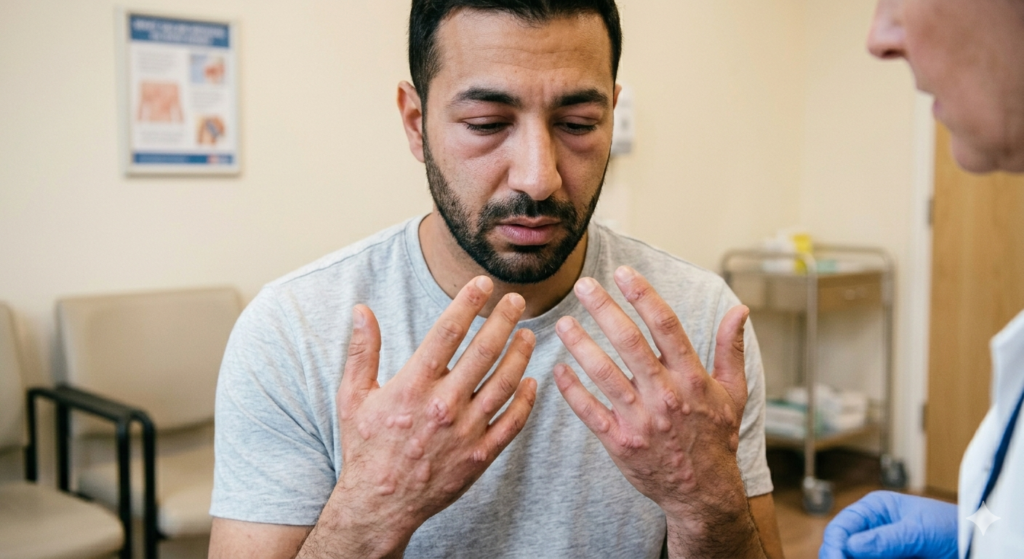
Hives, also known as urticaria, are itchy, raised welts that appear suddenly on the skin. They can affect any part of the body and may last from a few hours to several weeks. While hives are often harmless, recurrent or severe cases may require medical attention.
This guide explains the causes, symptoms, and treatment options for hives.
What Are Hives (Urticaria)?
Hives are red or skin-colored swollen bumps caused by the release of histamine and other chemicals in the skin.
Characteristics:
- Itchy welts or patches
- Sudden appearance
- Change in size and location
- Usually temporary
Common Symptoms of Hives
- Raised itchy bumps
- Burning or stinging sensation
- Redness or swelling
- Lesions that disappear and reappear in different areas
In some cases, swelling may occur deeper in the skin (angioedema).
Types of Hives
1. Acute Urticaria
- Lasts less than 6 weeks
- Often linked to allergies or infections
2. Chronic Urticaria
- Lasts more than 6 weeks
- Cause may be difficult to identify
3. Physical Urticaria
Triggered by physical factors such as:
- Heat
- Cold
- Pressure
- Exercise
- Sunlight
Common Causes of Hives
Allergic Reactions
- Foods (nuts, seafood, eggs)
- Medications
- Insect bites
Infections
- Viral infections
- Bacterial infections
Stress
Emotional stress may trigger or worsen hives.
Environmental Triggers
- Heat or cold
- Tight clothing
- Sweat
Unknown Causes
In many chronic cases, no clear trigger is identified.
What is Angioedema?
Angioedema is deeper swelling that may affect:
- Lips
- Eyelids
- Hands
- Throat
⚠️ Swelling of the throat can be dangerous and requires emergency care.
Treatment Options
1. Antihistamines (Main Treatment)
- Reduce itching and swelling
- Common first-line therapy
2. Corticosteroids
Used for severe flare-ups for short periods.
3. Avoiding Triggers
Identifying and avoiding triggers is essential.
4. Advanced Treatments
For chronic severe cases:
- Biologic medications
- Immunomodulatory therapy
Home Care Tips
- Avoid scratching
- Wear loose clothing
- Use cool compresses
- Avoid known triggers
Common Mistakes
- Ignoring severe swelling
- Overusing steroid medications
- Self-medicating without diagnosis
- Continuing exposure to triggers
When Are Hives Dangerous?
Seek urgent medical help if hives are associated with:
- Difficulty breathing
- Swelling of lips or throat
- Dizziness or fainting
These may indicate a severe allergic reaction.
Frequently Asked Questions (FAQ)
Are hives contagious?
No, hives are not contagious.
Can stress cause hives?
Yes, stress can trigger or worsen symptoms.
Do hives always indicate allergy?
No, many cases are not caused by allergies.
When to See a Dermatologist
Consult a specialist if:
- Hives recur frequently
- Symptoms last more than 6 weeks
- Home treatment is not effective
Conclusion
Hives are a common skin condition caused by various triggers, including allergies, infections, and stress. Most cases improve with proper treatment, but chronic or severe hives require professional evaluation and management.
Book a Consultation
If you are experiencing recurrent or severe hives, a dermatologist can help identify triggers and create an effective treatment plan to control symptoms and improve your quality of life.
Let’s talk about your skin
Contact our reception team to arrange a consultation or ask about our services.
This article provides general information and does not replace a medical consultation.